News and Insights
Practical updates on AI governance, workforce strategy, and digital resilience for EU organisations
When Your AI Vendor’s Market Power Becomes Your Governance Problem
•
EU Sovereign Cloud: What the Label Actually Means
•
Who Owns What Your AI Produces?
•
AI Act: only eight Member States ready
•
“EU sovereign cloud”: a marketing label
•
Reuters made AI literacy mandatory
•
AI Act: Five Months to Go
•
US AI Framework Targets State Patchwork
•
US States Advance AI Regulation Wave
•
When Your AI Vendor’s Market Power Becomes Your Governance Problem
•
EU Sovereign Cloud: What the Label Actually Means
•
Who Owns What Your AI Produces?
•
AI Act: only eight Member States ready
•
“EU sovereign cloud”: a marketing label
•
Reuters made AI literacy mandatory
•
AI Act: Five Months to Go
•
US AI Framework Targets State Patchwork
•
US States Advance AI Regulation Wave
•
Stay ahead of AI change. Get practical updates from Future Prep direct to your inbox.
By subscribing you agree to receive Future Prep updates. Unsubscribe any time.
Latest Insights
From the Future Prep blog

The EU’s antitrust chief has put every layer of the AI stack under scrutiny. For organisations using major platforms, that scrutiny is now a vendor risk input; one that most governance programmes have not yet mapped. Here are three practical steps to close that gap.

The EU sovereign cloud label has no agreed legal definition. Before trusting a vendor’s sovereignty claim, practitioners should demand written answers to three questions about ownership, jurisdiction and certification.

The EU AI Act regulates AI inputs but says nothing about who owns the output. Most governance programmes have not addressed this gap. Here are four steps to close it.

Three major research studies from early 2026 agree: AI workforce productivity does not improve because employees work less. It suffers because they work more. Here is what the data shows, why it happens, and what SME leaders should do differently.

The European Commission missed its 2 February 2026 deadline to publish EU AI Act high-risk guidance. With August 2026 obligations still in force, EU SMEs cannot afford to wait for official clarity before acting.
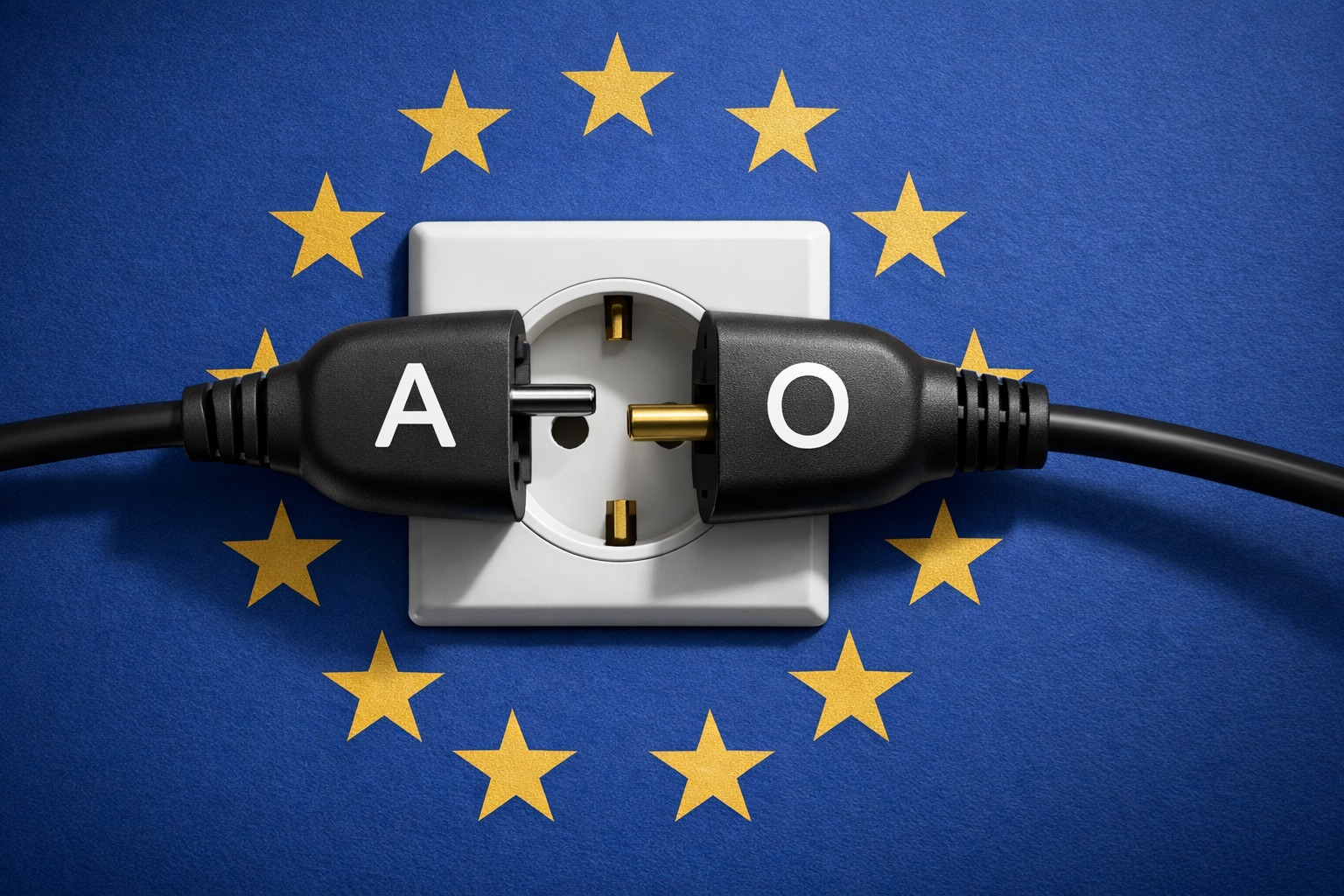
The Anthropic–Pentagon clash and the OpenAI deal that followed show how quickly access to a key AI platform can be reclassified by U.S. policy. EU organisations need a sovereignty-aware AI strategy before the next disruption forces the question.
Latest News
Short updates
AI Act: only eight Member States ready
Compliance teams are being asked to operationalise AI Act obligations against an enforcement infrastructure that is visibly incomplete. The Digital Omnibus adds a second layer of uncertainty: the rules themselves may still shift before August. The actionable question for practitioners is not whether to act but how to build governance structures that can flex if deadlines or obligations move.
“EU sovereign cloud”: a marketing label
Organisations in regulated sectors are making procurement decisions based on sovereignty claims that the current regulatory framework cannot yet verify. The gap between what hyperscalers call sovereign and what EU law actually requires is concrete and consequential; especially for organisations with US parent companies or Singapore branches where data jurisdiction matters.
Reuters made AI literacy mandatory
AI literacy is no longer a training budget aspiration. Article 4 of the AI Act requires providers and deployers to ensure sufficient AI literacy among staff and is already in force since February 2025. Reuters is a useful benchmark because it is a knowledge-work organisation, not a tech company, which makes the parallel directly relevant to legal, compliance, consulting and media teams.
AI Act: Five Months to Go
Five months is not much time if you have not started. SMEs deploying AI in HR, hiring, finance or safety-critical processes need to classify their tools now, not in July. The conformity assessment process – documentation, risk registers, human oversight protocols – takes longer than most teams expect. The good news is that the August deadline applies to new deployments; legacy systems in regulated products have until 2027. Start with an AI inventory. Everything else follows from that.
US AI Framework Targets State Patchwork
The White House’s March 20 National Policy Framework pushes a unified federal baseline for AI safety, child protection, intellectual property safeguards, and fraud prevention, explicitly aiming to preempt a confusing patchwork of state-level regulations and foster consistent national oversight. This move signals President Trump’s administration prioritizing streamlined governance over fragmented rules.
US States Advance AI Regulation Wave
New York proposes mandatory notices for generative AI outputs, Oregon targets oversight for AI “companion” apps handling sensitive interactions, and Utah strengthens rules on explicit deepfakes; running parallel to federal efforts and creating immediate compliance headaches for multi-state operators. These bills highlight growing bipartisan momentum at the state level, with enforcement teeth like civil penalties and injunctions already in committee drafts.