
Category: Governance
AI governance frameworks, oversight models, accountability structures, and organisational control over AI use
When Your AI Vendor’s Market Power Becomes Your Governance Problem
•
EU Sovereign Cloud: What the Label Actually Means
•
Who Owns What Your AI Produces?
•
AI Act: only eight Member States ready
•
“EU sovereign cloud”: a marketing label
•
Reuters made AI literacy mandatory
•
AI Act: Five Months to Go
•
US AI Framework Targets State Patchwork
•
US States Advance AI Regulation Wave
•
When Your AI Vendor’s Market Power Becomes Your Governance Problem
•
EU Sovereign Cloud: What the Label Actually Means
•
Who Owns What Your AI Produces?
•
AI Act: only eight Member States ready
•
“EU sovereign cloud”: a marketing label
•
Reuters made AI literacy mandatory
•
AI Act: Five Months to Go
•
US AI Framework Targets State Patchwork
•
US States Advance AI Regulation Wave
•
Stay ahead of AI change. Get practical updates from Future Prep direct to your inbox.
By subscribing you agree to receive Future Prep updates. Unsubscribe any time.

The EU’s antitrust chief has put every layer of the AI stack under scrutiny. For organisations using major platforms, that scrutiny is now a vendor risk input; one that most governance programmes have not yet mapped. Here are three practical steps to close that gap.

The EU sovereign cloud label has no agreed legal definition. Before trusting a vendor’s sovereignty claim, practitioners should demand written answers to three questions about ownership, jurisdiction and certification.

Three major research studies from early 2026 agree: AI workforce productivity does not improve because employees work less. It suffers because they work more. Here is what the data shows, why it happens, and what SME leaders should do differently.

The Delhi AI Summit exposed a sharp divide on global AI governance, with the US rejecting centralized rules and the EU backing multilateral standards.
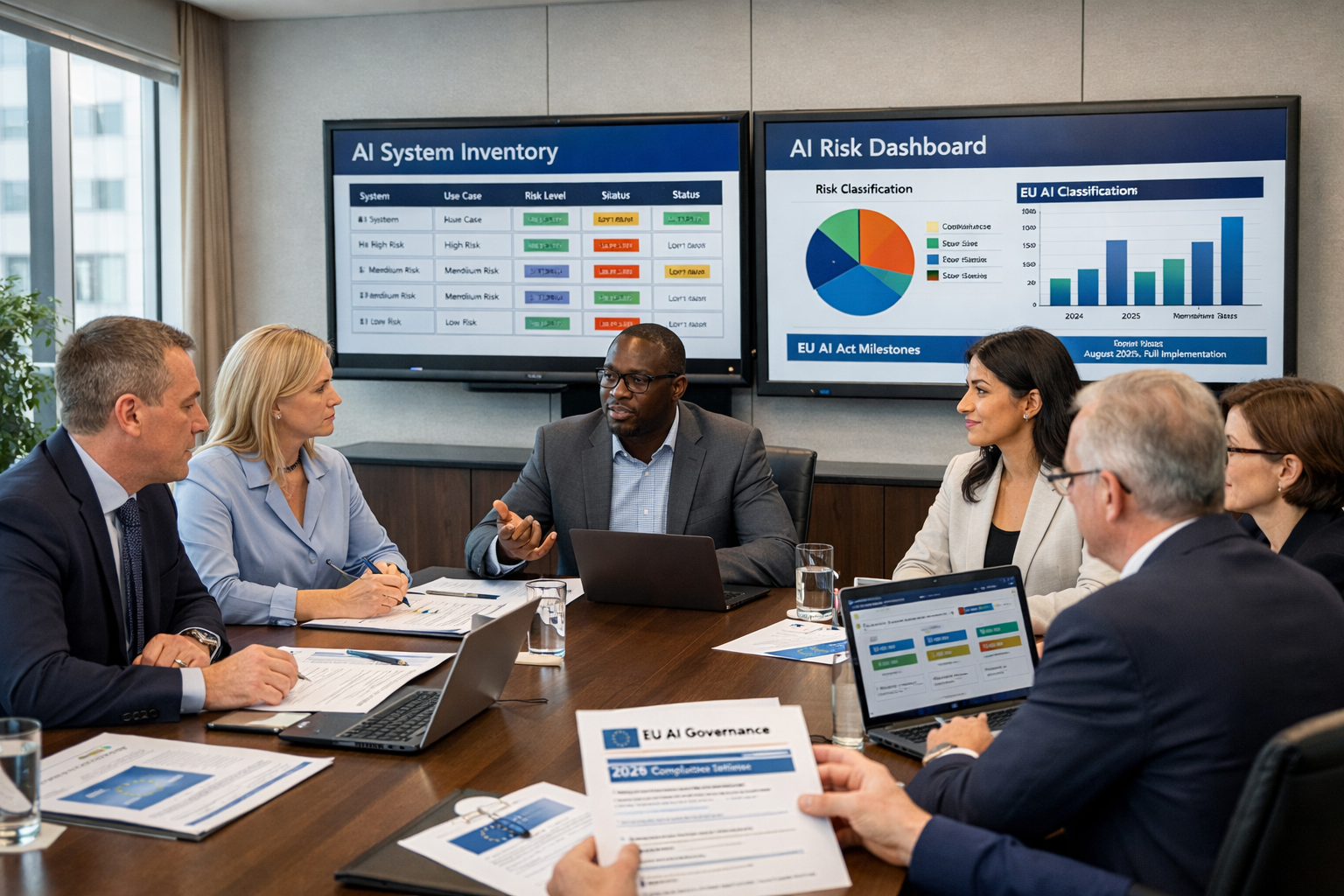
EU AI governance shifts from planning to execution in 2026. EU management and compliance leaders must evidence controls, classifications, and board oversight before enforcement begins.