
Denmark wants consent for deepfakes
•
Why AI-Assisted Attacks Go Through The Side Door
•
AMD plans its chip supply further ahead
•
An AI Savings Target Is A Promise, Not A Result
•
Spotting AI-Generated Scams Is The Wrong Defence
•
Copyright and AI: Brussels asks again
•
BNP’s Google deal has a data boundary
•
EDPB: a fine unless the breach is minor
•
The KIDS Act gates AI chatbots
•
Denmark wants consent for deepfakes
•
Why AI-Assisted Attacks Go Through The Side Door
•
AMD plans its chip supply further ahead
•
An AI Savings Target Is A Promise, Not A Result
•
Spotting AI-Generated Scams Is The Wrong Defence
•
Copyright and AI: Brussels asks again
•
BNP’s Google deal has a data boundary
•
EDPB: a fine unless the breach is minor
•
The KIDS Act gates AI chatbots
•
Stay ahead of AI change. Get practical updates from Future Prep direct to your inbox.
By subscribing you agree to receive Future Prep news. Unsubscribe any time.
Latest Insights
From the Future Prep blog

The EU’s antitrust chief has put every layer of the AI stack under scrutiny. For organisations using major platforms, that scrutiny is now a vendor risk input; one that most governance programmes have not yet mapped. Here are three practical steps to close that gap.
The EU sovereign cloud label has no agreed legal definition. Before trusting a vendor’s sovereignty claim, practitioners should demand written answers to three questions about ownership, jurisdiction and certification.

The EU AI Act regulates AI inputs but says nothing about who owns the output. Most governance programmes have not addressed this gap. Here are four steps to close it.

Three major research studies from early 2026 agree: AI workforce productivity does not improve because employees work less. It suffers because they work more. Here is what the data shows, why it happens, and what SME leaders should do differently.

The European Commission missed its 2 February 2026 deadline to publish EU AI Act high-risk guidance. With August 2026 obligations still in force, EU SMEs cannot afford to wait for official clarity before acting.
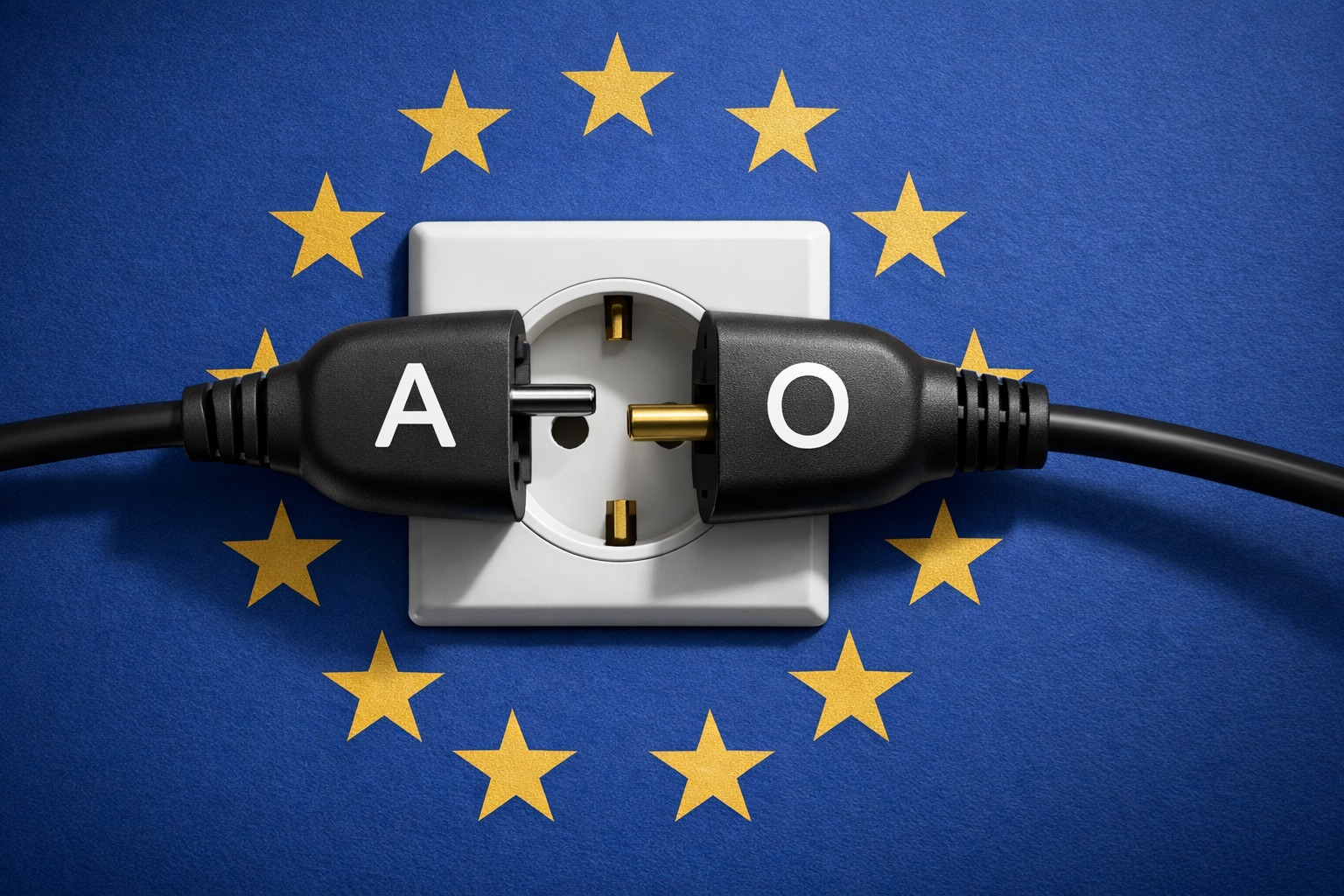
The Anthropic–Pentagon clash and the OpenAI deal that followed show how quickly access to a key AI platform can be reclassified by U.S. policy. EU organisations need a sovereignty-aware AI strategy before the next disruption forces the question.
Latest News
Short updates
Denmark wants consent for deepfakes
Denmark’s culture minister introduced a bill on 8 October to ban sharing realistic digital imitations of a person’s appearance or voice without consent. Performers’ work is covered too, and satire stays allowed. The minister hopes it takes effect at the turn of the year. For anyone generating synthetic voices or faces, the question moves from whether output is labelled to whose likeness it uses, and who agreed to that.
AMD plans its chip supply further ahead
AMD will substantially increase chip supply in 2027 and now plans three to five years ahead, chief executive Lisa Su told reporters in Taipei on 6 October. Demand still exceeds supply, AMD needs more advanced wafer capacity and Su called Taiwan critical to the chip supply chain. An AI roadmap set a year at a time quietly assumes that capacity will be there. How far ahead does yours look?
Copyright and AI: Brussels asks again
On 29 September the European Commission opened a consultation on how technology, AI included, affects copyright protection. The use of protected content in AI is one of four focus areas. Rights holders, generative AI providers and other AI value-chain actors are among those invited to respond until 3 November 2026. An organisation deploying generative AI arguably sits in that chain. Is its view on licensing better heard now, or after any new measures take shape?
BNP’s Google deal has a data boundary
BNP Paribas has signed a five-year Google Cloud partnership covering infrastructure, Gemini models and internal AI agents. It is not a wholesale move. The bank’s existing governance framework decides which data may run in public cloud, and certain categories will stay out. Each agent is to be limited to the resources its task needs. For an EU-operating organisation, the question is whether that boundary is drawn before the contract or after it.
EDPB: a fine unless the breach is minor
The EDPB has adopted guidelines setting a five-step test for when a data protection authority should fine rather than reprimand. Step four carries the weight. A minor infringement generally draws a reprimand, while a non-minor one brings a strong presumption that a fine follows. For an EU-operating organisation, the live question moves from whether a fine is likely to whether its own breach would count as minor. Consultation runs to 13 November.
The KIDS Act gates AI chatbots
The Commission’s KIDS Act proposal, adopted on 17 September, would stop AI companions and chatbots reaching the market until providers can demonstrate compliance and run a monitoring mechanism for emerging risks. Enforcement rides on the AI Act for chatbots and the DSA for platforms, with fines up to 6% of worldwide turnover. For anyone shipping a chatbot that minors can reach, that is a market gate rather than a conduct rule.