
Category: Operations
AI workforce operations impact, role redesign, capability building, training approaches, and adoption across departments
Denmark wants consent for deepfakes
•
Why AI-Assisted Attacks Go Through The Side Door
•
AMD plans its chip supply further ahead
•
An AI Savings Target Is A Promise, Not A Result
•
Spotting AI-Generated Scams Is The Wrong Defence
•
Copyright and AI: Brussels asks again
•
BNP’s Google deal has a data boundary
•
EDPB: a fine unless the breach is minor
•
The KIDS Act gates AI chatbots
•
Denmark wants consent for deepfakes
•
Why AI-Assisted Attacks Go Through The Side Door
•
AMD plans its chip supply further ahead
•
An AI Savings Target Is A Promise, Not A Result
•
Spotting AI-Generated Scams Is The Wrong Defence
•
Copyright and AI: Brussels asks again
•
BNP’s Google deal has a data boundary
•
EDPB: a fine unless the breach is minor
•
The KIDS Act gates AI chatbots
•
Stay ahead of AI change. Get practical updates from Future Prep direct to your inbox.
By subscribing you agree to receive Future Prep news. Unsubscribe any time.

Meta's Model Capability Initiative tips workplace monitoring into algorithmic management territory. For EU employers, that means Article 88 GDPR, Article 22, works council consultation and the AI Act's Article 26(7) all apply at once. Three controls to add before the next workforce monitoring pilot goes live.

Starling Bank's AI moves money. Norway's sovereign wealth fund keeps humans in charge. Both are deploying agentic AI but with very different governance choices. Here is what changes when AI starts acting, not just recommending, and what your oversight framework must address.

The EU AI Act regulates AI inputs but says nothing about who owns the output. Most governance programmes have not addressed this gap. Here are four steps to close it.

Three major research studies from early 2026 agree: AI workforce productivity does not improve because employees work less. It suffers because they work more. Here is what the data shows, why it happens, and what SME leaders should do differently.
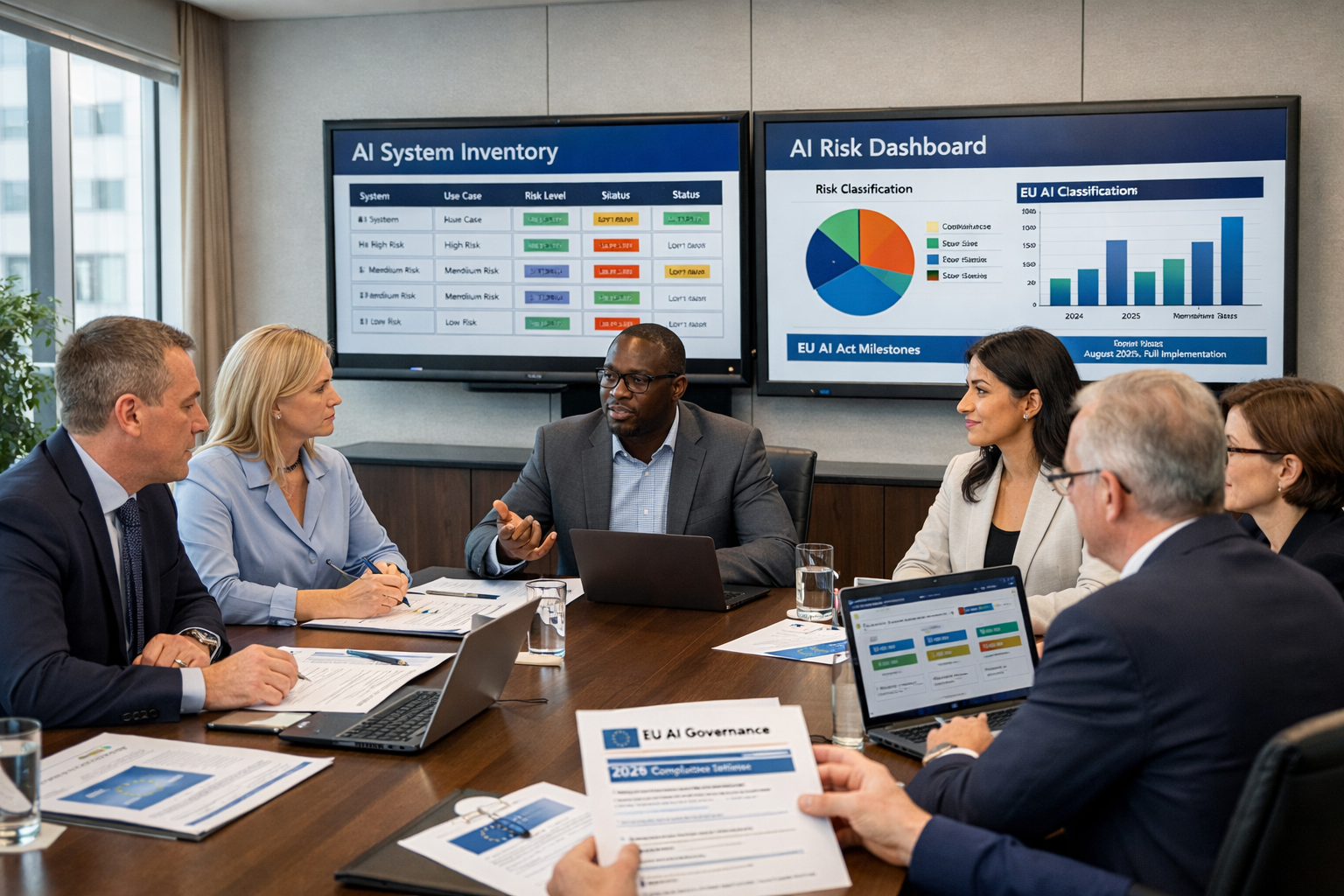
EU AI governance shifts from planning to execution in 2026. EU management and compliance leaders must evidence controls, classifications, and board oversight before enforcement begins.